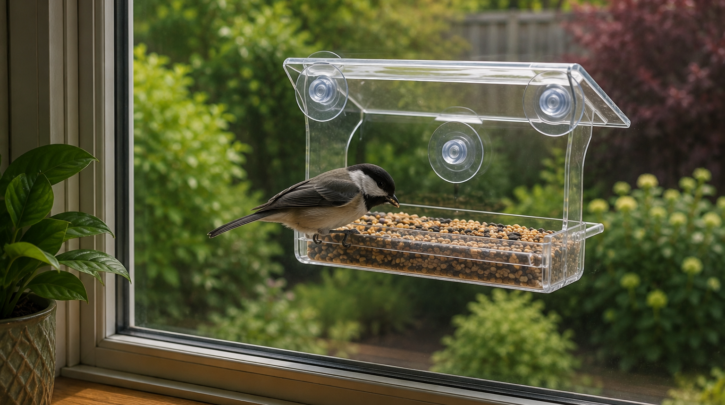

A suction-cup feeder mounted directly to a window offers something no other feeder type can: genuinely close, indoor-viewable access to feeding birds, without needing any yard space at all.
This site participates in affiliate programs. If you buy through a link on this page, we may earn a commission at no extra cost to you. Affiliate disclosure
Why Window Feeders Appeal to So Many Hosts
Apartment dwellers, urban hosts without a yard, and families with curious kids all benefit from a feeder that brings birds directly to the glass, offering a viewing distance no freestanding feeder placed at a reasonable distance could ever match.
The Window Strike Question
Window feeders raise a genuinely nuanced safety question. On one hand, a bird startled while actively feeding at the glass could fly into an adjacent window pane rather than away from the house entirely. On the other hand, a bird perched directly at a window feeder has a clear, close, unmistakable view of the glass surface itself, which some research suggests may actually reduce collision risk compared to a distant window a bird doesn’t clearly perceive as a solid barrier.
A Genuinely Unresolved Tradeoff
Neither position is definitively settled, and the honest answer is that window feeder safety depends heavily on the specific window, surrounding glass, and how the feeder itself is positioned. See our window strike guide for the broader collision-prevention picture this specific question fits into.
Suction Cup Reliability
Suction cup mounts can lose grip over time, particularly in extreme temperature swings or on textured glass, so checking mount security periodically matters more for a window feeder than it does for a pole-mounted or hanging design.
Weather Considerations
Because window feeders sit directly against the house, they receive somewhat different sun and weather exposure than a freestanding yard feeder, and seed inside a window feeder can heat up noticeably on a sun-facing window during summer afternoons.
Cleaning Considerations
Given the proximity to indoor living space, keeping a window feeder genuinely clean matters even more than usual, both for bird health, covered in our cleaning guide, and for keeping the window itself free of seed debris and droppings.
Considering a window feeder as your primary setup? Pair it with our seed comparison guide to choose food that won’t spoil quickly in a sun-exposed mount.
Who Should Actually Choose a Window Feeder
Window feeders make the most sense as a genuinely close-up viewing addition alongside, or in place of, a yard feeder for hosts without outdoor space, rather than as an automatic first choice for anyone with a full yard already available to work with.
Combining a Window Feeder With a Yard Setup
For hosts with both indoor viewing interest and outdoor space, running a window feeder alongside a standard yard feeder offers the best of both — close, detailed viewing at the window and broader capacity and species range from a freestanding setup elsewhere in the yard.
Placement Relative to Other Windows
Positioning a window feeder away from large adjacent glass surfaces, where a startled bird might otherwise fly, is a reasonable precaution consistent with the broader collision prevention principles covered in our window strike guide.
A camera feeder like the Birdfy Feeder pairs well with a window feeder, covering a spot farther out in the yard with close-up photos of every visitor.
A Genuinely Rewarding Option for the Right Setup
For the right household — limited outdoor space, curious kids, or simply a desire for the closest possible view — a window feeder offers a viewing experience no other feeder type can genuinely match.
A Final Word on Expectations
A window feeder won’t replace the capacity or species range of a full yard setup, but judged on its own terms — close, personal, genuinely engaging viewing — it delivers something no other feeder type is actually designed to provide.
Final Thoughts
Approach a window feeder as a genuine complement to a yard-based setup rather than a full replacement, and it becomes one of the most consistently rewarding additions on this site. Check the suction mount regularly, keep the glass clean, and position it thoughtfully relative to other windows — a window feeder can deliver years of close, satisfying viewing with remarkably little ongoing effort.
Give it a real trial through at least one full season before deciding whether it earns a permanent spot, since local birds can take a little while to discover and trust any new feeder.