
Moldy seed is more than wasted money sitting in a feeder — certain molds produce a genuine toxin that poses real, documented health risk to any bird that eats contaminated seed.
What Actually Causes Seed to Spoil
Moisture is the primary driver behind almost every seed spoilage problem — rain intrusion, ambient humidity, or condensation building up inside an enclosed feeder all create the damp conditions mold needs to establish. Seed sitting too long without turnover, and poor air circulation in some enclosed feeder designs, both make the problem considerably worse.
The Real Risk: Aflatoxin
Certain mold species, particularly within the Aspergillus genus, produce aflatoxin when growing on spoiled seed — a genuine, documented toxin rather than simply an unpleasant but harmless growth. This elevates moldy seed from a minor inconvenience to a real health risk worth actively preventing rather than casually tolerating.
Prevention Strategies
- Buy only as much seed as will genuinely be used within a few weeks, rather than stocking up far in advance
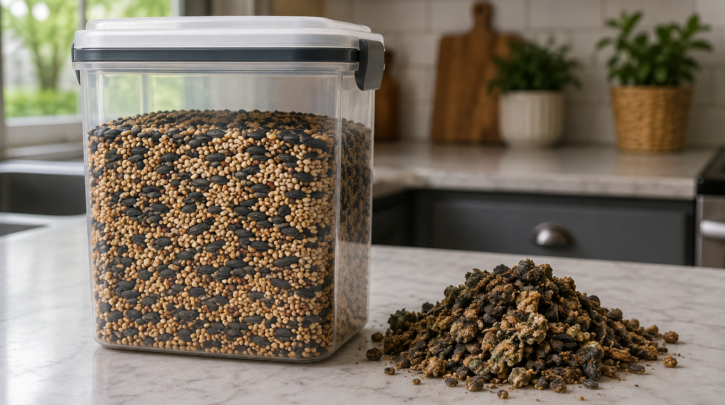
- Store unused seed in sealed, dry containers, ideally metal or heavy plastic bins, away from humidity
- Avoid overfilling feeders beyond what birds will realistically consume in a reasonable timeframe
- Choose feeder designs with genuine drainage holes and weather guards where rain exposure is a concern
Matching Feeder Design to Spoilage Risk
As covered in our feeder types comparison, fully enclosed tube feeders generally protect seed from rain better than open platform designs, making feeder choice itself part of a genuine spoilage-prevention strategy.
Recognizing Spoiled Seed
- Visible clumping where individual seeds stick together
- Visible fuzzy growth in white, black, or greenish coloring
- A musty or distinctly sour smell unlike fresh seed
- Noticeable discoloration compared to seed straight from the bag
Aflatoxin isn’t a theoretical risk — certain molds that grow on spoiled bird seed produce a genuine, documented toxin, making moldy seed a real health hazard rather than just an unappetizing mess.
What to Do If You Find Moldy Seed
Discard contaminated seed entirely rather than attempting to salvage the unaffected-looking portion, then clean the feeder thoroughly, covered in our cleaning guide, before refilling with fresh seed.
If the Problem Keeps Recurring
Persistent spoilage despite reasonable storage and cleaning practices is a genuine sign to reduce how much seed goes into the feeder at each refill, matching supply more closely to actual consumption rate rather than convenience.
Want to choose a feeder genuinely built to minimize this risk? See our feeder types guide for designs that handle weather exposure differently.
A Small Habit With Real Health Value
Checking seed condition at every refill takes only a moment and directly prevents one of the more genuinely underappreciated health risks at an otherwise well-intentioned feeding station.
Climate-Specific Considerations
Humid regions face a genuinely higher baseline spoilage risk than dry climates, meaning hosts in consistently damp areas may need to buy smaller quantities more frequently than the general guidance above would otherwise suggest.
Storage Beyond the Bag
Transferring seed from its original paper packaging into a genuinely sealed container immediately after purchase protects against both moisture and pest access considerably better than leaving seed in its original bag for extended storage.
A Problem Worth Preventing Rather Than Managing
Because aflatoxin risk makes this a genuine health concern rather than a cosmetic one, preventing spoilage in the first place through smart buying and storage habits is considerably more effective than trying to manage the problem after it’s already developed.
A Final Thought on Prevention
Buying smaller, fresher batches more often costs slightly more in convenience but genuinely pays off in reduced waste and meaningfully lower health risk for every bird visiting your feeder.
A System, Not a Single Task
Seed freshness, feeder cleaning, and thoughtful placement all reinforce each other — treating them as one connected system rather than separate chores produces noticeably better results over a full season.
None of these habits is difficult on its own, but together they meaningfully reduce the health risks a feeding station could otherwise unintentionally introduce. Building them into a routine early makes them second nature well before any spoilage problem gets a real chance to take hold.