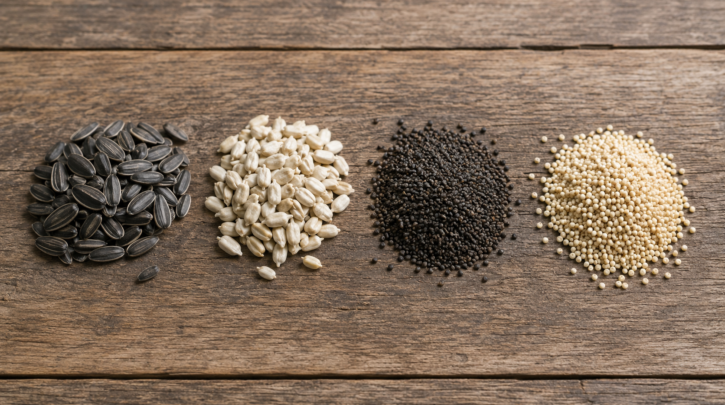

Four seed types cover the overwhelming majority of backyard bird feeding, and each one genuinely serves a different purpose. Understanding what each actually does well makes seed choice far less confusing than the wall of options at a typical store might suggest.
Black Oil Sunflower
The single most universally popular backyard seed, and for good reason: a thin, easy-to-crack shell and high oil content make it appealing to an extraordinarily wide range of species — chickadees, finches, cardinals, jays, woodpeckers, and nuthatches all take it readily.
Black Oil Sunflower Drawbacks
Because it appeals to virtually everything, black oil sunflower doesn’t exclude less-desired visitors like starlings or house sparrows, and discarded hulls accumulating below a feeder can create a genuine mess and, if left unmanaged, a mold or fungus risk covered in our seed spoilage guide.
Safflower
A white, thick-shelled, notably bitter seed that many squirrels and some less-desired birds genuinely find unappealing, while cardinals, chickadees, and several finch species continue eating it happily. This selective quality makes safflower a genuinely useful tool for shifting feeder composition without resorting to a physically exclusionary feeder design.
Safflower Drawbacks
Safflower typically costs somewhat more than black oil sunflower, and because fewer species visit it enthusiastically, a feeder switched entirely to safflower may see reduced overall traffic even as it becomes more selective about who’s actually visiting.
Nyjer (Thistle)
A tiny black seed specifically favored by goldfinches, siskins, and redpolls, with some chickadee interest as well. Nyjer requires a specialized feeder with small ports or mesh — a standard tube feeder simply spills it — and it’s genuinely one of the more expensive seeds per pound.
Nyjer Drawbacks
Nyjer spoils considerably faster than sunflower if allowed to sit, so buying in smaller quantities and keeping it genuinely fresh matters more here than with most other seed types.
White Proso Millet
Favored primarily by ground-feeding species — doves, sparrows, juncos — rather than the perching birds most feeder hosts are trying to attract. Millet is cheap and shows up as filler in many commercial wild bird mixes, but scattered in a standard hanging feeder it often just accumulates uneaten.
Millet Drawbacks
Millet works best offered specifically on a platform or ground feeder for the species that actually want it, rather than mixed into a general feeder blend where it’s more likely to go to waste.
There’s no single best bird seed — sunflower maximizes species range, safflower shifts who shows up, nyjer targets finches specifically, and millet serves ground feeders that the other three largely ignore.
A Quick Comparison
- Broadest species appeal: black oil sunflower
- Best for discouraging squirrels and some undesired birds: safflower
- Best for goldfinches and siskins specifically: nyjer
- Best for ground-feeding species like doves and juncos: white proso millet
- Best value per pound: black oil sunflower, typically
- Most expensive per pound: nyjer, typically
Building a Seed Strategy
Most successful feeding setups use black oil sunflower as a genuine base, then add nyjer in a dedicated finch feeder and, if squirrel or unwanted-visitor pressure is a real problem, safflower in place of or alongside the sunflower rather than trying to solve every goal with one single seed type.
Curious how suet fits alongside seed in a complete feeding strategy? See our suet guide for the high-energy food seed alone can’t fully replace.
A Reasonable Starting Point
If choosing only one seed to start with, black oil sunflower offers the best combination of species range, value, and availability — everything else on this list is genuinely worth adding once you know more specifically what you’re hoping to attract.
Wild Bird Mixes: A Word of Caution
Many bagged “wild bird mixes” combine several of these seeds along with cheap filler grains that few desirable feeder birds actually eat, leading to significant waste as birds selectively pick out sunflower and leave the rest scattered below. Buying seed types separately and combining them intentionally generally produces better results than a pre-mixed bag.
Reading a Seed Mix Label
Checking the ingredient list on any pre-mixed bag for red or golden millet, wheat, or oats high on the list is a reasonable way to spot a mix likely to generate more waste than value, since these fillers are considerably cheaper for manufacturers to include than genuinely desirable seed.
Storage Considerations Across Seed Types
All seed benefits from dry, sealed storage away from direct sunlight, but nyjer in particular loses freshness fastest and benefits most from buying smaller quantities more frequently rather than stocking up in bulk the way sunflower reasonably tolerates.