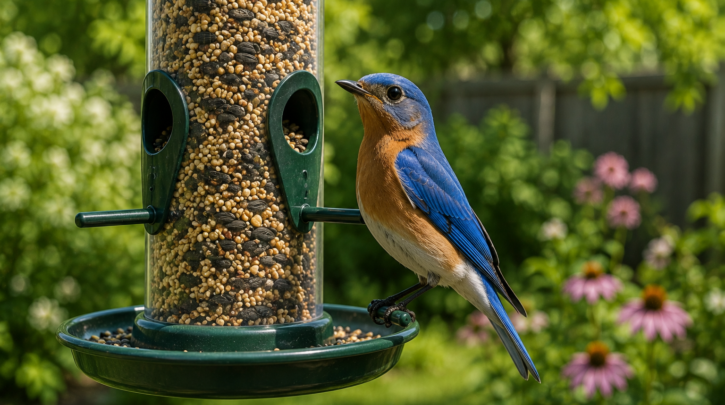

A feeder concentrates birds into closer, more repeated contact than they’d naturally experience on their own, and that concentration genuinely increases the risk of several documented diseases spreading through a local population.
This site participates in affiliate programs. If you buy through a link on this page, we may earn a commission at no extra cost to you. Affiliate disclosure
Salmonellosis
A bacterial infection spread through droppings contaminating feeders and seed, salmonellosis shows a real, documented seasonal pattern, with outbreaks more common in winter when birds congregate more heavily at limited food sources.
Mycoplasmal Conjunctivitis
Widely known as House Finch eye disease, this condition spreads through direct contact at shared feeding surfaces, causing crusty, swollen eyes that don’t kill directly but meaningfully impair the vision a bird depends on for spotting predators and finding food.
Avian Pox
A viral disease causing wart-like lesions, transmitted through direct contact or biting insects. Feeder congregation can facilitate spread simply by keeping more birds in closer, more frequent contact than they’d otherwise experience.
Trichomonosis
A protozoal infection particularly affecting doves, often spread through shared water sources rather than seed feeders specifically, making bird bath hygiene, covered in our bird bath guide, just as relevant as feeder cleanliness for this particular disease.
A feeder doesn’t create disease from nothing — it concentrates birds closely enough that diseases already present in a population spread considerably faster than they would through the same birds foraging naturally dispersed across a wider area.
Recognizing a Sick Bird
- Lethargy or noticeably reduced activity
- Ruffled or puffy appearance beyond normal cold-weather fluffing
- Crusty or swollen eyes
- Difficulty flying or maintaining balance on a perch
- Unusual tameness or a lack of typical wariness around people
A camera feeder like the Birdfy Feeder can help you spot these signs early, since you can zoom in on each visitor in the photos.
What to Do If You Suspect Disease at Your Feeder
- Take feeders down entirely for at least one to two weeks, a standard piece of guidance from wildlife agencies during documented outbreaks
- Clean all feeders thoroughly with a bleach solution before resuming, covered in our cleaning guide
- Report unusual clusters of sick or dead birds to your local wildlife agency
Why Taking Feeders Down Actually Helps
Removing the concentrated food source for a genuine period lets the local congregation naturally disperse, reducing the close contact driving transmission in the first place, rather than simply continuing to feed birds into the same crowded, higher-risk situation.
Want to reduce baseline disease risk going forward? See our cleaning guide for a regular routine that keeps this risk meaningfully lower year-round.
A Reasonable Standing Practice
Spreading feeders across a station rather than concentrating everything at one point, covered in our multi-feeder station guide, combined with regular cleaning, meaningfully reduces baseline disease risk even without any active outbreak underway.
Regional Disease Alerts Worth Following
Many state and regional wildlife agencies issue public alerts during documented disease outbreaks affecting local bird populations, and following these alerts gives hosts genuinely useful, timely information about when temporarily suspending feeding makes the most sense.
Why This Matters Beyond Your Own Yard
A feeder that continues operating during a known local outbreak doesn’t just risk the birds visiting that specific yard — it can genuinely contribute to spreading disease more widely as the same individual birds move between multiple feeding stations across a neighborhood.
A Genuinely Manageable Risk
None of this is meant to discourage feeding birds altogether — understanding these risks and responding appropriately when warning signs appear makes for a genuinely more responsible approach than either ignoring the issue or feeling like it’s all somehow beyond an individual host’s control.
A Final Word on Perspective
The vast majority of feeder interactions never involve disease transmission at all — these precautions exist to handle the genuine exceptions responsibly, not to suggest feeding birds is inherently risky.
Reasonable hygiene habits, paired with basic awareness of what a sick bird looks like, cover the great majority of useful precaution available to any host. Feeding birds remains a genuinely rewarding, low-risk activity for anyone who stays reasonably attentive to the signs covered here.