
Summer shifts the central concern at a feeding station from quantity to heat management — the food itself becomes more vulnerable to spoiling even as natural water demand climbs to its highest point of the year.
This site participates in affiliate programs. If you buy through a link on this page, we may earn a commission at no extra cost to you. Affiliate disclosure
Seed Spoilage Risk Peaks Now
Hot weather accelerates the moisture and mold conditions covered in our seed spoilage guide, making smaller, more frequent refills genuinely more effective than a large refill meant to last several weeks.
Suet Needs Real Attention
Standard suet can melt and turn rancid in summer heat, covered in our suet guide — switching to a no-melt formulation, or simply reducing suet offerings through the hottest stretches, avoids both the waste and the mess a melted cake creates.
Water Demand Reaches Its Peak
Hot weather makes water genuinely more important than at any other point in the year, and a bath or water feature, covered in our bird bath guide, sees noticeably more use during summer than during cooler months.
Shade Placement Matters More Now
Positioning feeders to avoid unbroken afternoon sun, covered in our placement guide, genuinely helps slow seed degradation and keeps feeding areas more comfortable during the hottest part of summer days.
A Natural Dip in Seed Consumption
With insects and other natural food genuinely abundant through summer, seed consumption often drops somewhat compared to spring and winter, making reduced refill quantities a reasonable adjustment rather than a sign of declining feeder interest.
Summer feeding is less about volume and more about timing — smaller, fresher batches of seed and suet genuinely beat a single large refill left to degrade through the hottest stretch of the year.
Planning Around Travel
For hosts planning to be away, gradually reducing feeder reliance before an extended absence, rather than stopping abruptly, gives visiting birds time to shift back toward natural food sources without an abrupt, disruptive gap in supply.
Heading into fall soon? See our fall feeding guide for how a station should shift as temperatures begin dropping again.
A Season That Rewards Attentiveness
More than any other season, summer rewards a host who checks in regularly rather than setting up a feeder and leaving it unattended for extended stretches, given how quickly heat can turn a well-intentioned feeding station into a genuine spoilage risk.
A camera feeder like the Birdfy Feeder helps here too, since its visit alerts show when activity drops off, often a sign the feeder needs attention.
A Reasonable Summer Checklist
- Refill seed in smaller, fresher batches rather than large quantities meant to last weeks
- Switch to no-melt suet or reduce suet offerings through the hottest stretches
- Keep water sources topped off and genuinely clean given peak summer demand
- Reposition feeders away from unbroken afternoon sun where reasonably possible
- Taper off gradually, rather than stopping abruptly, before any extended travel
A Season Where Less Is Often More
Resisting the urge to fully stock every feeder to capacity, and instead matching supply more closely to the naturally reduced summer consumption rate, genuinely reduces waste and spoilage risk without meaningfully reducing how well birds are actually being supported.
Bridging Into Fall
The habits built through summer — smaller refills, attentive checking, heat awareness — carry forward naturally into the preparation work fall actually requires.
A Season Worth Enjoying, Not Just Managing
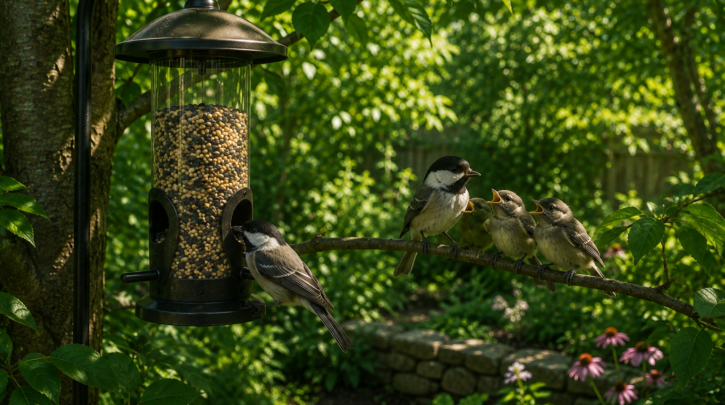
Despite the extra attention summer demands, this is also a genuinely rewarding season for watching fledglings and family groups across nearly every species, making the added effort feel considerably more worthwhile in practice.
Stay attentive, keep things fresh and clean, and summer becomes a genuinely enjoyable season rather than simply a demanding one to get through.
The birds visiting through summer are often raising the very families that will return to your yard again next year, making this season’s effort a genuinely long-term investment as much as an immediate one.
Keep that longer view in mind, and even the more demanding parts of summer feeding start to feel genuinely worthwhile rather than simply burdensome.
Every season eventually gives way to the next, and summer is really no exception — fall’s preparation work begins right where this particular, demanding stretch of the year genuinely leaves off.
Carry the habits built here forward, and fall’s preparation work will feel like a natural next step rather than starting completely and entirely from scratch all over again from square one, every single year without any real exception at all worth noting here.
Take that momentum into the cooler months ahead, and the whole feeding station will genuinely and quite noticeably be better for it in the end, season after season, year after year, without any real exception at all to speak of.