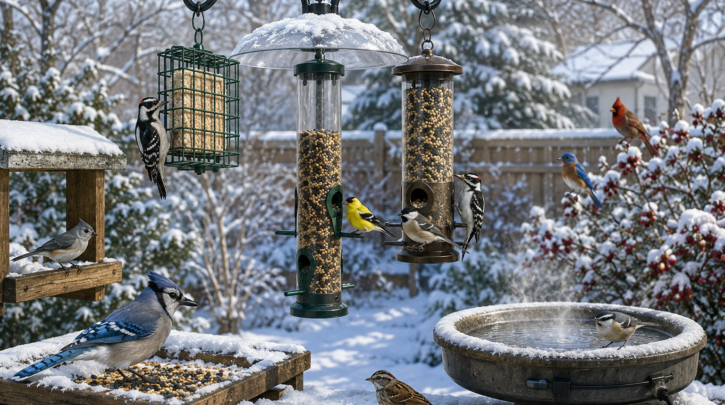

Winter is genuinely the highest-value season for feeding backyard birds — natural food is scarce, energy demands from staying warm are high, and a well-run feeder can matter more now than at any other point in the year.
Why Winter Feeding Matters So Much
Cold weather dramatically increases how much energy birds need just to maintain body temperature, and with natural seed, fruit, and insect availability at its lowest point of the year, a reliable feeder genuinely fills a gap that would otherwise be considerably harder to close.
Suet Becomes Especially Valuable
Suet’s concentrated fat content, covered in our suet guide, delivers exactly the energy density winter demands, and standard suet formulations work fine in cold weather without the melting concerns relevant during summer.
Feeder Traffic Typically Peaks Now
Winter generally brings the heaviest feeder activity of the year, meaning more frequent refills and closer attention to seed condition, covered in our seed spoilage guide, since higher traffic also means seed gets used up, and needs replacing, faster.
Weather-Resistant Feeders Matter Most Right Now
Feeders with genuine weather guards and drainage, covered in our feeder types guide, earn their keep most clearly during winter, when snow and moisture intrusion pose the greatest risk to keeping seed genuinely dry and usable.
Water Becomes Genuinely Harder to Find
Natural water sources freeze over for much of winter, making a heated bath, covered in our bird bath guide, one of the more genuinely valuable additions during exactly this stretch of the year.
Winter feeding matters more than any other season precisely because natural food and water are both at their scarcest right when energy demands are at their highest — the timing genuinely couldn’t line up more directly.
Don’t Skip Cleaning Just Because It’s Cold
Cold weather doesn’t eliminate disease risk, and salmonellosis specifically shows a real, documented seasonal pattern tied to winter congregation at limited food sources, covered in our disease and hygiene guide. Regular cleaning, covered in our cleaning guide, remains just as important in January as it is in July.
Want to make sure your setup is genuinely ready for peak winter demand? Revisit our multi-feeder station guide to check for any gaps before the coldest weather actually arrives.
A Season Worth Getting Right
Of every season covered across this site, winter offers the clearest, most direct opportunity to genuinely help birds through the hardest stretch of their year — the effort put in now matters more than at almost any other time.
A Reasonable Winter Checklist
- Keep suet stocked and check it more frequently given higher winter consumption
- Refill seed feeders more often than during warmer, quieter months
- Confirm weather guards and drainage are genuinely doing their job during snow or freezing rain
- Keep a heated bath running if resident species remain through the coldest stretches
- Stick to a regular cleaning schedule despite the cold
Watching for Signs of Real Need
Unusually heavy, sustained feeder traffic during a genuine cold snap is a reasonable signal that local birds are relying on your station more heavily than usual, making exactly that moment the wrong time to let supply run low.
A Season That Rewards Consistency
More than flashy upgrades or premium gear, simply keeping feeders reliably stocked and clean through the coldest months genuinely delivers the most value any host can offer during winter.
Looking Ahead to Spring
As winter eases, feeder demand gradually shifts again, covered in our spring feeding guide, closing the loop on a full seasonal cycle that starts right back here again the following year.
A Final Thought
Winter asks the most of any host willing to genuinely commit to it, and it rewards that commitment more directly and visibly than any other season covered on this entire site.
Keep feeders stocked, keep water available, and keep an eye out for anything that suggests the local population is leaning on your station more heavily than usual — that combination of attentiveness genuinely carries a feeding station through the hardest months of the entire year, without needing any special gear or elaborate technique beyond genuine consistency.