
Fall is genuinely a preparation season more than anything else — the work done now directly shapes how well a feeding station handles the considerably higher demands winter brings.
This site participates in affiliate programs. If you buy through a link on this page, we may earn a commission at no extra cost to you. Affiliate disclosure
A Good Time for a Thorough Cleaning
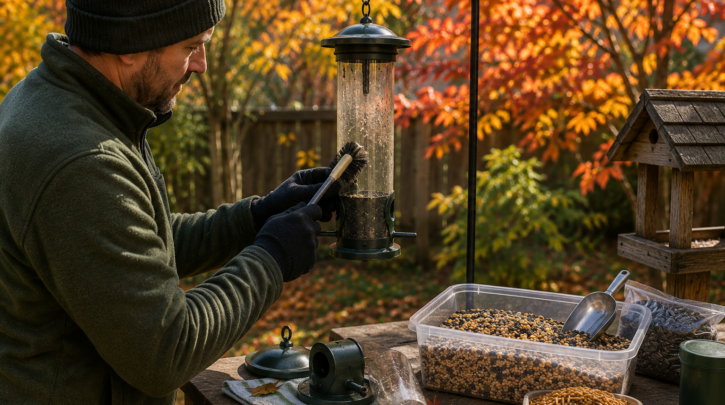
Before winter’s heavier traffic begins, fall is a reasonable point for a complete top-to-bottom cleaning of every feeder, covered in our cleaning guide, rather than heading into the demanding winter months with a station that’s accumulated a full season of buildup.
Stocking Up, Sensibly
Buying seed and suet ahead of winter’s heavier demand makes sense, but the storage guidance covered in our seed spoilage guide still applies — buying in genuinely reasonable quantities, stored properly, beats stockpiling far more than can actually be used while still fresh.
Increasing Suet Gradually
As temperatures begin dropping, gradually increasing suet availability, covered in our suet guide, eases the transition into winter’s full energy demands rather than waiting until the coldest weather arrives all at once.
Squirrel Activity Increases Now
Fall brings a genuine uptick in squirrel caching behavior, making this a good time to double-check squirrel-proofing measures, covered in our squirrel-proofing guide, before winter’s peak feeder demand makes any existing gaps considerably more costly.
Fall doesn’t offer the dramatic visibility of peak winter feeding, but the preparation done now — cleaning, stocking, squirrel-proofing — directly determines how smoothly a station actually handles winter once it fully arrives.
A Season for Using Your Gear
With activity levels genuinely elevated as birds prepare for winter, fall is a rewarding time to put binoculars and identification accessories, covered in our accessories guide, to good use.
A camera feeder like the Birdfy Feeder extends the same idea, photographing and identifying visitors while you’re away.
A Fitting Close to a Full Year
From winter’s peak demand through spring’s transition, summer’s heat management, and now fall’s quiet preparation, feeding backyard birds never really has an off season — each stretch of the year asks for something a little different, and getting each one right is what this entire site has been about.
Ready to review the complete picture? Start back at our feeder types guide or placement guide for the fundamentals everything else here builds on.
A Reasonable Fall Checklist
- Deep-clean every feeder before winter’s heavier traffic begins
- Stock up on seed and suet in genuinely reasonable, storable quantities
- Gradually increase suet availability as temperatures drop
- Double-check squirrel-proofing measures before winter demand peaks
- Keep binoculars and a field guide handy for fall’s heightened activity
Thank You for Following This Guide
Whether you started with a single feeder or a fully designed station, we hope this site has made feeding backyard birds more effective, more enjoyable, and considerably safer for the birds themselves. Whatever brought you here, we hope it left your backyard, and the birds visiting it, a little better off than before.
Take care of the birds finding their way to your yard, season after season. Good luck out there, and happy feeding.