
If squirrels or larger birds are dominating a feeder meant for smaller songbirds, two genuinely different design approaches solve the problem: physical exclusion through caging, and mechanical exclusion through weight sensitivity.
This site participates in affiliate programs. If you buy through a link on this page, we may earn a commission at no extra cost to you. Affiliate disclosure
Physical Exclusion: Caged Feeders
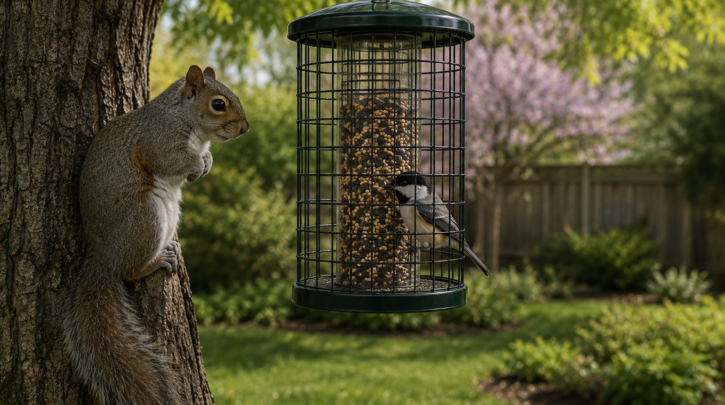
A caged feeder surrounds the actual feeding ports with an outer wire barrier sized to let small birds pass through while physically blocking anything larger — squirrels, jays, grackles, and similar bigger visitors simply can’t fit through the cage at all.
Why Physical Exclusion Is So Reliable
Because the barrier is a fixed size, a caged feeder provides a genuinely consistent, predictable result regardless of how determined or clever a specific animal happens to be — there’s no threshold to game, just a gap too small to fit through.
Mechanical Exclusion: Weight-Activated Feeders
A weight-activated feeder uses a spring-loaded perch or shroud that closes feeding access once a certain weight threshold is exceeded, letting small birds feed normally while a squirrel or larger bird triggers the mechanism and gets shut out.
Why Mechanical Exclusion Sometimes Needs Tuning
Weight thresholds can require adjustment for genuinely heavy small-bird visitors or unusually light squirrels, and the mechanism itself is one more moving part that can wear out or need occasional maintenance compared to a simple fixed cage.
Which Approach Actually Excludes What
- Caged feeders exclude based on physical size, working well against both squirrels and larger birds
- Weight-activated feeders exclude based on body weight, which correlates with size but isn’t identical to it
- Combining both approaches in a single feeder design offers genuinely redundant protection for anyone facing persistent pressure from both squirrels and larger birds
A Real-World Application
This same caging principle shows up across species-specific contexts throughout backyard birding — for example, hosts specifically wanting to protect chickadee and finch feeder access from larger, bolder jays rely on exactly this kind of size-based physical exclusion.
Facing squirrel pressure specifically? See our squirrel-proofing guide for a complete strategy beyond feeder choice alone.
Setting Realistic Expectations
Even a well-designed exclusion feeder won’t stop squirrels or larger birds from investigating it repeatedly — the goal is reliable exclusion from actually accessing the food, not eliminating curiosity or repeated attempts entirely.
A Reasonable Way to Choose
For most yards, a simple caged design offers the more predictable, lower-maintenance solution, while a weight-activated feeder can offer a sleeker look and slightly easier access for small birds once correctly calibrated for local conditions.
If squirrel damage is the main problem, a chew-proof metal smart feeder like the Birdfy Feeder Metal 2 4K is another option, and its camera shows you exactly who’s getting in.
Cage Size Matters More Than Cage Presence
Not every caged feeder excludes the same range of animals — a cage sized to stop only squirrels may still admit larger birds, while a tighter cage genuinely built for smaller songbird access excludes both squirrels and larger birds at once.
Testing Effectiveness in Your Own Yard
Local squirrel and bird behavior varies enough that watching how a specific feeder actually performs over the first few weeks offers a more reliable read on real-world effectiveness than any general product description alone.
A Worthwhile Investment for Persistent Pressure
For any yard genuinely struggling with squirrels or larger birds monopolizing feeder access, an exclusion feeder solves a real, common frustration more reliably than relocating a feeder or trying various home-remedy deterrents.
A Reminder About Realistic Expectations
No exclusion feeder eliminates squirrel or larger-bird interest entirely, but a genuinely well-matched design shifts the outcome from constant frustration to occasional, harmless investigation that never actually succeeds in reaching the food inside.
Final Thoughts
Checking on a new exclusion feeder periodically over the first few weeks is the best way to confirm it’s genuinely working for your specific yard and local wildlife. Give it a real trial period — local squirrels often need a few weeks to test, and eventually give up on, a design that actually works.
Combining a caged feeder with a separate, unrestricted feeding area elsewhere in the yard often works better than exclusion alone — most squirrels do eventually move on to easier sources rather than persisting indefinitely against a barrier that never pays off.