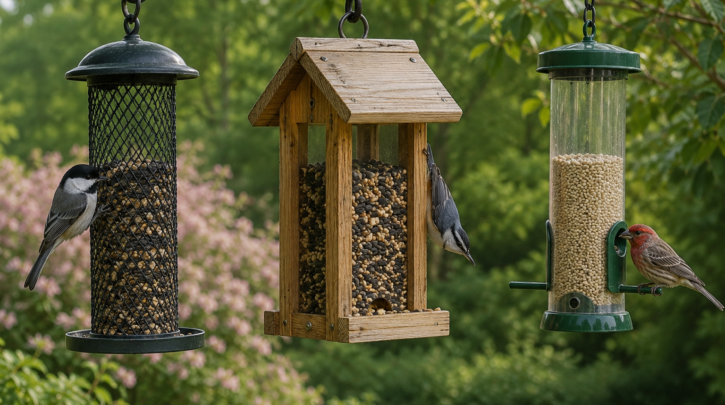

Feeder material genuinely affects durability, squirrel resistance, and how much ongoing maintenance a feeder actually needs — a detail easy to overlook when comparing feeders primarily on price or capacity.
Metal Feeders
Steel, often powder-coated, and aluminum are the most common metal feeder materials. Metal genuinely resists squirrel chewing better than any other common material, and powder coating adds meaningful weather resistance on top of the base metal’s natural durability.
Metal Drawbacks
Metal feeders can heat up noticeably in direct summer sun, and if the protective coating is damaged, exposed metal can begin rusting over time. Metal feeders also tend to sit at a higher price point than comparable wood or plastic options.
Wood Feeders
Cedar and redwood are popular choices given their natural weather resistance without chemical treatment. Wood offers a classic, natural look that many hosts specifically prefer over metal or plastic alternatives.
Wood Drawbacks
Wood is genuinely vulnerable to squirrel chewing, and without regular maintenance it can develop mold or begin rotting, particularly in consistently humid climates. Even naturally resistant wood species will eventually degrade faster than metal or quality plastic under sustained outdoor exposure.
Plastic and Recycled Poly Feeders
Lightweight, generally weather resistant, and often the most affordable option, plastic feeders are easy to clean given their smooth, non-porous surface. UV-resistant recycled poly options hold up considerably better under sustained sun exposure than standard plastic.
Plastic Drawbacks
Plastic is generally less chew-resistant than metal, though many designs reinforce likely chew points specifically to address this. Lower-quality plastic can also become brittle over years of UV exposure, an issue quality UV-resistant materials specifically address.
Material choice isn’t just aesthetic — it directly determines how a feeder holds up against squirrels, weather, and years of sun exposure, often more than price alone would suggest.
Matching Material to Your Situation
- Heavy squirrel pressure: metal generally performs best
- Hot, sunny climate: powder-coated metal or UV-resistant plastic over untreated wood
- Humid climate: metal or plastic over wood, given wood’s mold and rot vulnerability
- Budget-conscious first feeder: quality plastic offers the best value-to-durability ratio
Whatever material you choose, proper cleaning matters more than material alone for bird safety — see our cleaning guide for a complete maintenance routine.
A Reasonable Default
For most yards without extreme squirrel pressure or particularly harsh climate conditions, quality plastic or powder-coated metal both offer a reasonable, low-maintenance starting point well ahead of untreated wood.
Hybrid Designs
Many feeders now combine materials strategically — a metal cage or reinforcement around a plastic or wood body, for example — capturing some of metal’s chew resistance without the full weight or cost of an all-metal construction.
A Note on Longevity Claims
Manufacturer durability claims vary considerably in how rigorously they’re tested, so checking verified buyer reviews for real-world longevity, particularly regarding squirrel damage and UV degradation, offers a more reliable picture than marketing material alone.
Material Choice Compounds Over Time
The real cost difference between materials often shows up only after a year or more of outdoor exposure, when a cheaper but less durable feeder may already need replacing while a higher-quality option originally costing more continues performing well.
A Reasonable Way to Think About Cost
Comparing feeders purely on upfront price misses the more important question of cost-per-year across the feeder’s realistic lifespan, a calculation that often favors the more durable material even at a higher initial price point.
Final Thoughts
There’s no universally correct material — only the one that best matches your climate, local squirrel pressure, and how much maintenance you’re willing to commit to. A slightly higher upfront cost for the right material is almost always cheaper in the long run than repeatedly replacing an ill-suited feeder.
When genuinely unsure, a hybrid design offers a reasonable middle ground between cost and durability for most typical backyard situations.