 Written by: Justin Roberts
Posted on: July 4, 2026
Written by: Justin Roberts
Posted on: July 4, 2026
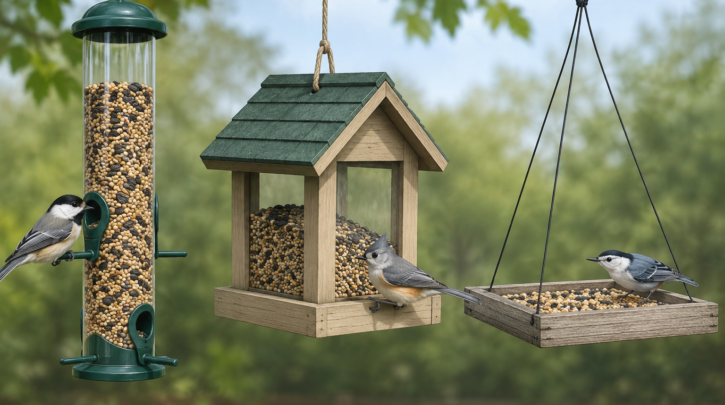
Tube vs. Hopper vs. Platform Feeders: Which Should You Buy?
Almost every backyard feeder on the market is some variation on three basic designs. Understanding what each one actually does well makes choosing between them considerably easier than comparing individual products feature by feature. Tube Feeders A cylindrical tube with multiple feeding ports, typically holding…
 Written by: Justin Roberts
Posted on: July 4, 2026
Written by: Justin Roberts
Posted on: July 4, 2026
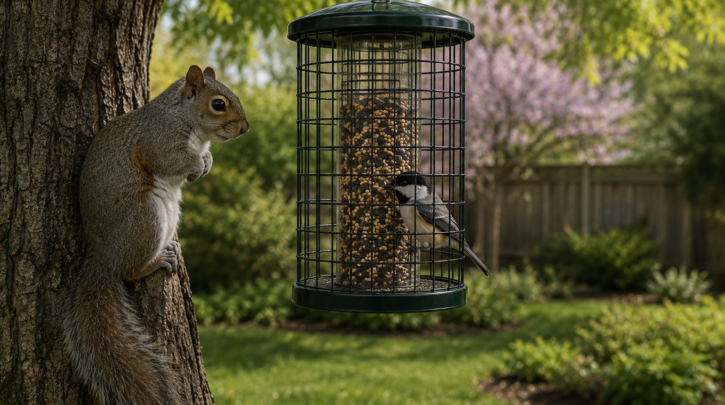
Caged and Selective Feeders Explained: Two Ways to Exclude Larger Animals
If squirrels or larger birds are dominating a feeder meant for smaller songbirds, two genuinely different design approaches solve the problem: physical exclusion through caging, and mechanical exclusion through weight sensitivity. This site participates in affiliate programs. If you buy through a link on this…
 Written by: Justin Roberts
Posted on: July 4, 2026
Written by: Justin Roberts
Posted on: July 4, 2026
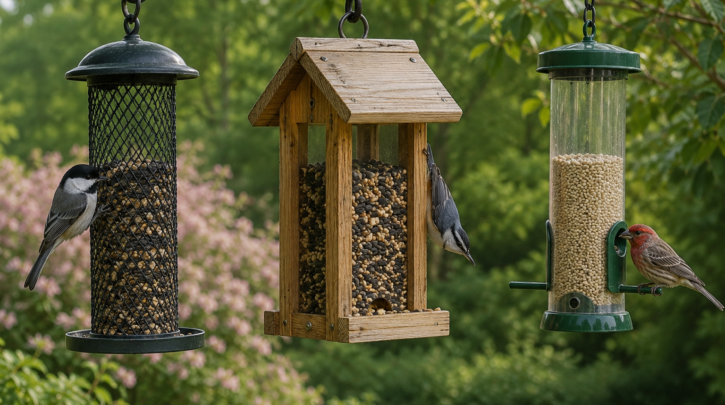
Feeder Materials Compared: Metal vs. Wood vs. Plastic
Feeder material genuinely affects durability, squirrel resistance, and how much ongoing maintenance a feeder actually needs — a detail easy to overlook when comparing feeders primarily on price or capacity. Metal Feeders Steel, often powder-coated, and aluminum are the most common metal feeder materials. Metal…
 Written by: Justin Roberts
Posted on: July 4, 2026
Written by: Justin Roberts
Posted on: July 4, 2026
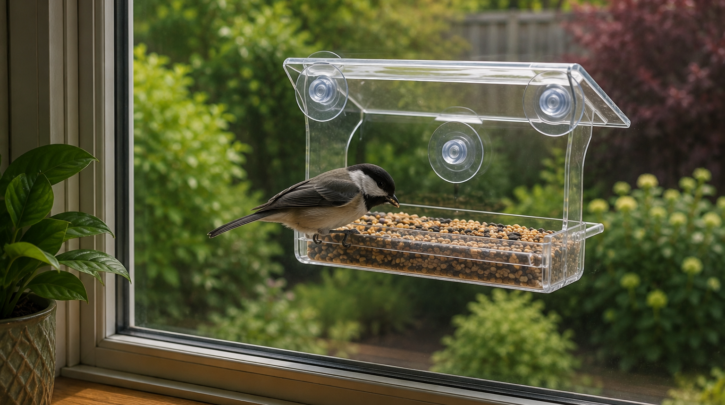
Window Feeders: A Closer Look at the Pros, Cons, and Real Tradeoffs
A suction-cup feeder mounted directly to a window offers something no other feeder type can: genuinely close, indoor-viewable access to feeding birds, without needing any yard space at all. This site participates in affiliate programs. If you buy through a link on this page, we…