
Feeder cleaning genuinely isn’t optional housekeeping — it directly affects how much disease risk you’re introducing to the very birds you’re trying to help by feeding them in the first place.
Why Cleaning Matters So Much
A feeder concentrates birds into close, repeated contact at shared feeding ports in a way that simply doesn’t happen naturally at the same density. Wet or spoiled seed, accumulated droppings, and shared surfaces all create genuine conditions for disease transmission, covered in more depth in our disease and hygiene guide.
Recommended Cleaning Frequency
A general baseline of cleaning every two weeks works for most standard seed feeders, though high-traffic periods, wet weather, or any sign of sick birds in the area all justify cleaning considerably more often, up to weekly.
Nectar Feeders Need More Frequent Attention
Nectar feeders ferment considerably faster than seed ever spoils, needing cleaning every three to four days in hot weather — worth flagging for anyone running a nectar feeder alongside standard seed feeders.
The Actual Cleaning Process
- Empty the feeder completely and discard any old or wet seed rather than topping it off
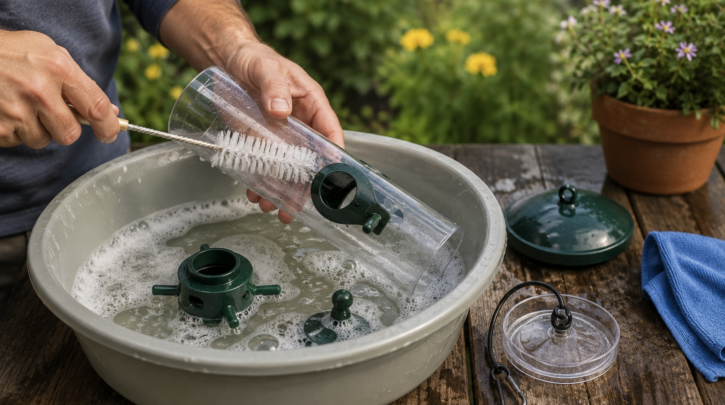
- Scrub all surfaces with a brush, paying particular attention to ports and corners where residue accumulates
- Wash with a dilute bleach solution, roughly one part bleach to nine parts water, or hot soapy water as an alternative
- Rinse thoroughly to remove all cleaning solution residue
- Allow the feeder to fully air dry before refilling
Why Full Drying Matters
Refilling a still-damp feeder reintroduces the exact moisture that promotes mold growth in the first place, covered in our seed spoilage guide — a rushed cleaning routine that skips proper drying genuinely undermines the whole point of cleaning at all.
Cleaning a feeder isn’t just tidying up — it’s directly managing disease transmission risk among birds that a feeder has already concentrated more closely together than they’d naturally gather on their own.
Don’t Forget the Ground Below
Debris and droppings accumulating beneath a feeder, particularly platform and hopper designs with more spillage, deserve regular cleanup too — not just the feeder surface itself. Raking or sweeping the area below periodically reduces the same mold and disease risk at ground level.
Useful Tools
- Bottle brushes sized for tube feeder interiors
- Dedicated feeder cleaning brush kits sold commercially with multiple brush shapes
- A large basin or tub for fully soaking removable feeder parts before scrubbing
Curious what actually causes seed to spoil in the first place? See our seed spoilage guide for the specific risks cleaning alone can’t fully address.
A Habit Worth Building Early
Establishing a regular cleaning routine from the very start of hosting birds is considerably easier than trying to introduce one later after a feeder has already accumulated significant buildup, making this one habit worth committing to from day one.
Cleaning Different Feeder Types
Tube feeders generally require full disassembly for a thorough clean, while platform feeders, covered in our feeder types guide, are typically the fastest and easiest to clean given their completely open design.
A Reasonable Rotation Schedule
Hosts running multiple feeders, covered in our multi-feeder station guide, often find it easier to clean one or two feeders thoroughly each week on a rotating basis rather than attempting to deep-clean an entire station in a single session.
Signs You’re Cleaning Often Enough
Fresh-smelling seed, no visible mold or clumping at refill time, and no unusual illness among visiting birds are all reasonable signs your current cleaning schedule is genuinely keeping pace with actual feeder use.
A Final Word on Consistency
A slightly imperfect but consistent cleaning schedule genuinely beats an occasional deep clean followed by long stretches of neglect — regularity matters more here than intensity.
Bringing It All Together
Cleaning, correct seed storage covered in our seed spoilage guide, and thoughtful placement covered elsewhere on this site all work together as one connected system rather than separate, unrelated chores — neglecting any single piece genuinely undermines the value of getting the others right.
Approach feeder maintenance as an ongoing practice rather than an occasional chore, and both seed quality and bird health noticeably improve as a direct result over time.
Few habits covered anywhere on this site deliver this much genuine benefit for this relatively modest amount of ongoing time and effort actually required to actually maintain it consistently over time, season after season, without much real difficulty or ongoing hassle involved at all for most hosts.