
A single feeder, however well chosen, genuinely limits how many species can comfortably feed at once. A thoughtfully designed multi-feeder station solves this by spreading activity across several access points rather than forcing every visitor through one bottleneck.
Why Multiple Feeders Beat One
A single feeder concentrates competition at one location, letting a dominant or aggressive species monopolize access. Spreading feeding options across a station reduces this concentration, letting different species groups feed simultaneously with considerably less direct conflict.
A Real Example
Bold, dominant feeder visitors, like jays, can genuinely monopolize a single feeding point given the chance. Spacing feeders apart, or adding a size-restrictive design covered in our exclusion feeder guide, directly addresses this same dynamic.
Spacing Between Feeders
Enough distance between feeders prevents one particularly assertive bird from guarding multiple locations simultaneously, but spacing everything too far apart makes routine maintenance and refilling considerably more tedious. A distance of roughly ten to fifteen feet between major feeding points is a reasonable starting balance for most yards.
Layering by Height
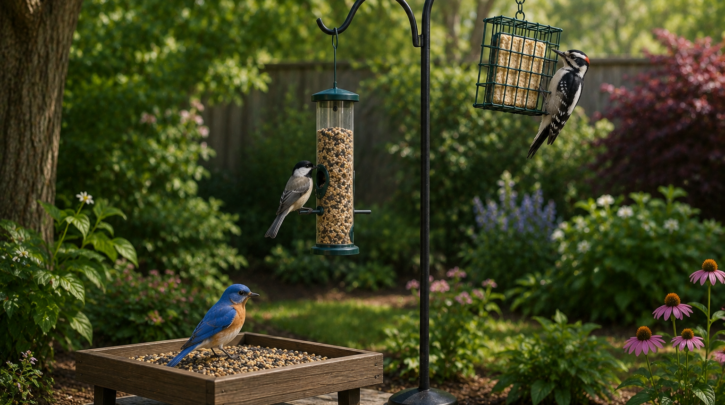
Combining ground or low platform feeders, mid-height hanging feeders, and elevated pole feeders within one station mimics the natural vertical layering of real habitat, matching different species’ natural foraging preferences rather than forcing everything into a single height range.
Matching Layers to Species
- Ground level: doves, juncos, and other species covered in our seed guide’s millet section
- Low platform: a broad range of species, including larger visitors that struggle with enclosed designs
- Mid-height hanging: tube and hopper feeders serving most common songbirds
- Elevated pole-mounted: suet and specialty feeders, often paired with the predator-safety considerations in our height and safety guide
Combining Food Types Across a Station
A well-rounded station typically combines a seed feeder, a suet feeder, and, where relevant, a nectar feeder and water feature, giving visiting birds several genuinely different reasons to stop by rather than relying on seed alone to do all the work.
A multi-feeder station isn’t just more feeders — it’s a deliberate layering of height, food type, and spacing that lets far more species feed comfortably than any single feeder ever could on its own.
Balancing Sun, Shade, and Wind Across the Layout
Positioning different feeder types to take advantage of the same general placement principles covered in our placement guide — some morning sun, shelter from prevailing wind, safe distance from windows and dense cover — matters just as much across a full station as it does for a single feeder.
Ready to add water to your station? See our bird bath guide for a feature that rounds out any multi-feeder setup.
Starting Small and Expanding Thoughtfully
Most successful multi-feeder stations grow gradually from a single starting feeder rather than being installed all at once, giving a host time to observe what’s actually working before committing to a larger, more complex layout.
Maintenance Considerations for Larger Stations
More feeders mean more regular cleaning and refilling, covered in our cleaning guide, so expanding a station should factor in genuine ongoing time commitment rather than just the upfront cost of additional feeders.
A Reasonable Pace for Growth
Adding one new feeder type every season or so, rather than building an entire station at once, gives a host time to genuinely understand what’s working locally before investing further in a specific direction.
A Station Worth the Effort
A well-designed multi-feeder station rewards the planning involved with genuinely higher species diversity and considerably less feeder-to-feeder competition than any single feeder, however well chosen, could ever manage on its own.
A Final Thought on Station Design
Treat the whole layout as an ongoing project rather than a finished product — the best multi-feeder stations keep evolving as a host learns what actually draws local birds in reliably.
A season or two of observation will teach you more about what your specific yard needs than any general guide, this one included, ever fully could. Trust that observation over any rigid initial plan, and let the layout change a little each year as you learn.