
Well-meaning hosts occasionally offer food that genuinely isn’t safe for backyard birds, often without realizing it. Understanding what to actually avoid, and why, matters as much as choosing the right seed or suet in the first place.
Bread
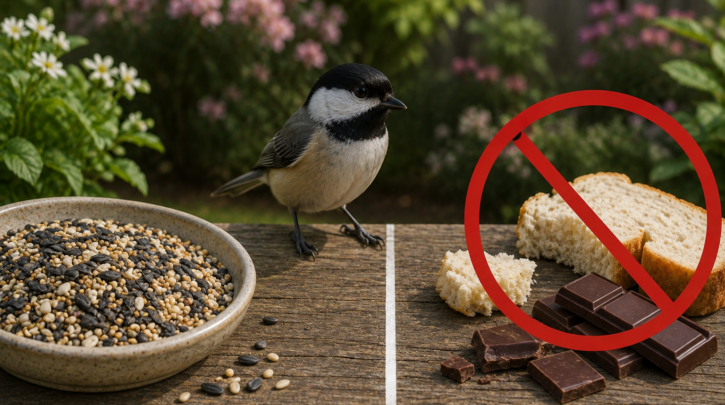
Bread offers minimal nutritional value, and birds that fill up on it may eat less of the actual nutritious food they need, a genuine malnutrition risk if bread becomes a significant part of the diet. Moldy bread carries an additional, more immediate risk covered in our seed spoilage guide.
This Applies to Waterfowl Too
The same malnutrition concern has increasingly discouraged feeding bread to ducks and other waterfowl, not just backyard feeder birds — a genuinely wider shift in feeding guidance over recent years.
Avocado
Avocado contains persin, a compound genuinely toxic to birds even in small quantities. This one is worth taking seriously rather than assuming a “healthy” human food is automatically safe for wildlife.
Chocolate
Chocolate contains theobromine, toxic to birds in the same general way it’s toxic to dogs and other mammals. There’s no safe quantity worth risking here.
Onions and Garlic
Both can damage red blood cells in birds with repeated exposure, making them worth avoiding entirely rather than treating as a minor seasoning concern.
Raw Dried Beans
Raw beans contain compounds that are toxic until properly cooked, a risk most hosts wouldn’t think to consider given how safe cooked beans are for human consumption.
Fruit Pits and Apple Seeds
These contain trace cyanide-related compounds. The risk from an occasional seed is minor, but there’s no upside to offering them intentionally, so removing pits and seeds before offering fruit is a reasonable, low-effort precaution.
Milk and Dairy
Birds generally lack the ability to properly digest lactose, making dairy products a poor choice even though it’s not acutely toxic the way some items on this list are.
Honey
Honey can harbor botulism-causing bacteria, a risk that becomes particularly dangerous once exposed to moisture and warmth — exactly the conditions typical of an outdoor feeder.
Not every food that’s safe for humans is safe for birds — avocado, chocolate, and honey are common kitchen items that carry genuine, documented risk at a backyard feeder.
A Quick Reference List
- Bread (malnutrition risk, mold risk when spoiled)
- Avocado (contains toxic persin)
- Chocolate (contains toxic theobromine)
- Onions and garlic (damage red blood cells with repeated exposure)
- Raw dried beans (toxic until cooked)
- Fruit pits and apple seeds (trace cyanide compounds)
- Milk and dairy (poor digestibility)
- Honey (botulism risk once exposed to moisture)
- Salted or heavily processed snack foods generally
Want to know what actually belongs at a feeder instead? See our seed comparison guide for food genuinely worth offering.
A Reasonable Default Rule
When genuinely unsure whether something is safe, sticking to purpose-made bird food — seed, suet, and mealworms covered elsewhere on this site — avoids the guesswork entirely and remains the safest default for any backyard feeding station.
A Note on Table Scraps Generally
Beyond the specific items listed above, table scraps as a category tend to carry hidden salt, seasoning, or preservative content that most people don’t think to check before offering leftovers to backyard birds, making purpose-made bird food a genuinely safer default even for items not explicitly listed here.
What About Fruit and Vegetables Generally?
Plain, unseasoned fruit and vegetables, with pits and seeds removed, are generally fine for many species in moderation, though they shouldn’t replace the seed, suet, and mealworms that actually meet most backyard birds’ nutritional needs.
Why This List Matters More Than It Might Seem
A single instance of most items on this list is unlikely to cause serious harm, but repeated exposure — or a real quantity of something like avocado or chocolate — genuinely carries risk worth taking seriously. A quick mental check before offering anything unusual takes only a moment and protects the very birds you’re trying to help.
A Simple Habit Worth Building
Before offering any food that isn’t purpose-made bird food or plain, unseasoned fruit or vegetables, taking a moment to check whether it appears on a list like this one is a small habit that prevents most avoidable feeding mistakes before they happen.