
For insectivorous and semi-insectivorous backyard birds, mealworms offer a protein source seed simply can’t replicate — but choosing between live and dried genuinely matters for how effectively they actually work.
Live Mealworms
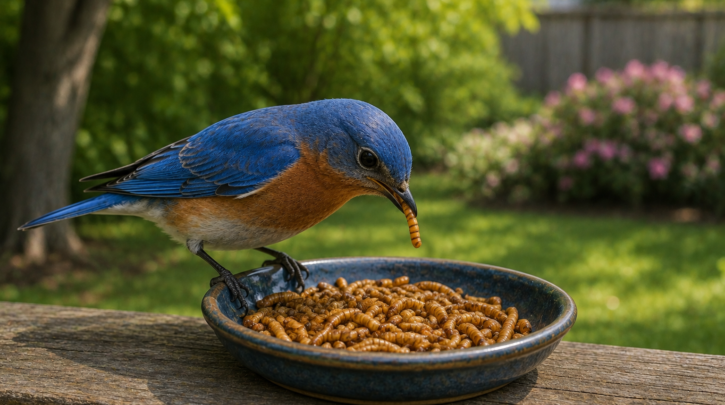
Live mealworms are considerably more attractive to insectivorous species than dried alternatives, given their natural wriggling movement and higher moisture content — bluebirds in particular respond strongly, along with wrens and robins.
The Real Cost of Live Mealworms
Live mealworms require genuine ongoing care to keep them alive until used — refrigeration slows their metabolism considerably, and they need occasional feeding themselves, typically with oats or a small piece of carrot for moisture. This is more effort than most other feeder foods require, and live mealworms typically cost more per volume than dried.
Dried Mealworms
Dried mealworms are shelf-stable, considerably easier to store and transport, and generally less messy to handle than live ones. Acceptance varies by species and by individual bird, though many species readily take dried mealworms once they become accustomed to them at a feeder.
Improving Dried Mealworm Acceptance
Briefly rehydrating dried mealworms in water before offering them can improve acceptance noticeably, since the added moisture and softer texture more closely approximates what a bird would encounter with live prey.
When the Difference Matters Most
During the breeding season specifically, when protein demand rises sharply for parents feeding nestlings, live mealworms tend to see the most enthusiastic uptake — where insect availability becomes genuinely critical to nesting success.
Live mealworms consistently outperform dried ones for attracting genuinely insectivorous species, but the gap narrows considerably once birds become accustomed to a reliable dried source, particularly outside the breeding season.
A Practical Comparison
- Best raw attraction power: live mealworms
- Best convenience and shelf life: dried mealworms
- Best value per feeding: dried mealworms, generally
- Best for breeding season specifically: live mealworms
- Least ongoing effort: dried mealworms, requiring no care between purchase and use
A Reasonable Way to Start
Starting with dried mealworms, rehydrated before offering, gives most hosts a genuinely workable introduction to mealworm feeding without the ongoing care live mealworms require, with room to switch to live specifically during breeding season if attracting insectivorous species becomes a priority.
Interested in what else insectivorous species need beyond mealworms? See our feeding mistakes guide for foods that genuinely don’t belong at any feeder.
Storage Considerations
Live mealworms need cool, ventilated storage and should be checked periodically for die-off, while dried mealworms simply need a sealed, dry container away from direct sunlight — a meaningful difference in ongoing commitment worth weighing before buying in bulk.
Which Species Respond Best
Bluebirds are among the most consistently enthusiastic mealworm feeders, but wrens, robins, and even some woodpecker species will take advantage of a reliable mealworm offering, particularly when natural insect availability dips.
Presentation Matters
Offering mealworms in a shallow, open dish rather than a standard seed feeder generally improves visibility and access for the specific species most likely to actually want them, since these birds aren’t typically adapted to feeding from an enclosed tube or hopper design.
A Food Worth the Extra Effort
For hosts specifically hoping to attract insectivorous species that seed and suet alone won’t reach, mealworms genuinely reward the extra effort and expense compared to sticking with a standard seed-only setup.
Location Matters as Much as Type
Placing a mealworm dish somewhere visible but reasonably sheltered, away from open exposure to wind and direct sun, helps keep the food appealing longer and gives visiting birds a genuinely comfortable spot to actually use it.
Checking the dish daily and removing any uneaten food before it spoils keeps the offering fresh, safe, and reliably appealing to whatever insectivorous species happen to visit.
A Final Thought on Getting Started
Testing a small quantity of either type before committing to a larger purchase is a reasonable way to gauge local interest before scaling up. Whichever type you start with, consistency matters more than volume — a small, reliable daily offering builds visitor habits faster than a large, irregular one.