
Suet delivers a concentration of energy that no seed type can genuinely match, making it one of the most valuable additions to a feeding station — provided you choose the right type for the season.
What Suet Actually Is
Traditional suet is rendered beef fat, often combined with seed, nuts, fruit, or insects and formed into a cake shaped to fit a standard suet cage. The high fat content makes it genuinely calorie-dense compared to seed, which matters most when natural food is scarce and energy demands are high.
Suet Types
- Plain suet cakes — pure rendered fat, the simplest option
- Seed-suet blends — fat combined with sunflower or millet for added variety
- Fruit-and-nut suet — appeals to a broader range of species including some that prefer fruit alongside fat
- Insect suet — formulated to mimic a natural insect diet, particularly appealing to insectivorous species
- No-melt suet — a genuinely different rendering process formulated specifically to resist melting in warm weather
Why Winter Is When Suet Matters Most
Cold weather dramatically increases energy demands across nearly every bird species, and suet’s concentrated fat content addresses that need more directly than seed alone can. This is exactly why suet consumption tends to spike during the coldest stretches of the year.
The Summer Problem: Melting and Rancidity
Standard suet genuinely can melt and turn rancid in hot weather, both wasting the product and creating a mess. No-melt formulations solve this directly through a different rendering process, or you can simply reduce or pause suet offerings during the hottest stretches of summer, covered in our summer feeding guide.
Suet Feeder Types
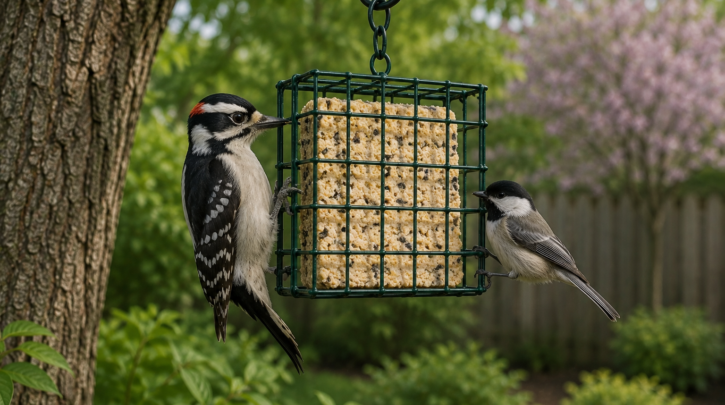
Standard suet cages hold a rectangular cake and work for most general suet feeding. Suet plug feeders use a cylindrical shape designed for specific woodpecker-style feeder ports, while tail-prop suet feeders add a vertical surface mimicking tree bark, specifically valuable for larger woodpeckers that rely on bracing their tail against a trunk while feeding.
Matching Feeder to Visitor
A basic cage suet feeder attracts the widest range of visitors, while a tail-prop design specifically caters to larger woodpecker species that may otherwise struggle to feed comfortably from a simple flat cage.
Suet’s concentrated fat content makes it one of the most valuable winter foods available, but the same fat that makes it so useful in cold weather makes it a genuine liability once temperatures climb, unless you switch to a no-melt formulation.
Who Actually Eats Suet
Woodpeckers, nuthatches, and chickadees are among the most consistent suet visitors, though a genuinely wide range of species will take advantage of it opportunistically, particularly during the energy-demanding stretches of winter and the breeding season.
Want to round out a complete feeding station? See our multi-feeder station guide for how suet fits alongside seed and other food types.
A Genuinely Seasonal Food
More than any other food type covered on this site, suet genuinely benefits from seasonal adjustment — offered generously in winter, phased out or switched to no-melt through summer, and available across the shoulder seasons depending on local temperature.
Homemade Suet
Some hosts render their own suet from raw beef fat, allowing full control over added ingredients, though homemade suet generally lacks the shelf stability of commercial preparations and needs to be used or refrigerated more promptly.
A Reasonable Note on Cost
Suet is generally inexpensive relative to the energy it delivers, making it one of the more cost-effective additions to a feeding station per calorie offered, particularly compared to some specialty seed types covered in our seed comparison guide.
A Food Worth Genuine Seasonal Attention
Few items on a feeding station benefit as directly from matching the season as suet does — the same food that’s genuinely essential in January can become a liability by July without the right formulation or a reasonable pause in offering it.
A Final Word on Combining Suet With Other Food
Offering suet alongside seed rather than as a total replacement gives visiting birds genuine flexibility to choose whichever food matches their current energy needs. Suet remains one of the most consistently worthwhile investments on this site, provided the type genuinely matches the season it’s offered in.